Sleep Awareness Month Reminder: Rest Begins Before Bed
Most people think sleep starts when their head hits the pillow.
It doesn’t.
Sleep begins with how you spend the last 60–90 minutes of your day.
If you close your laptop at 10:59pm and expect your nervous system to power down at 11:00pm, you’re asking your body to perform a biological miracle.
That’s not how physiology works.
Sleep is a transition.
And one of the most powerful tools for guiding that transition is something ancient, simple, and deeply effective:
Herbal tea.
Why Herbal Tea Works for Sleep
Herbal tea isn’t just warm water with flavor.
It’s:
-
A nervous system signal
-
A digestive cue
-
A behavioral ritual
-
A botanical delivery system
When you brew tea at night, you’re doing more than hydrating.
You are telling your body:
“It’s time to slow down.”
Warm liquids stimulate the parasympathetic nervous system — the “rest and digest” state required for deep sleep.
Add calming herbs, and the effect becomes even more powerful.
The Nervous System & Sleep Connection
Your body cannot enter deep sleep if it feels threatened.
Even mild stress — emails, scrolling, arguments, noise, bright lights — keeps your nervous system elevated.
The body operates in two primary states:
-
Sympathetic (Fight or Flight)
-
Parasympathetic (Rest and Digest)
Deep sleep only happens in parasympathetic dominance.
Herbal teas support this shift gently and naturally.
The Best Herbs for Sleep
Let’s break down some of the most powerful botanicals for rest.
🌿 Lavender
-
Reduces anxiety
-
Lowers heart rate
-
Encourages calm
Lavender is one of the most studied herbs for sleep support. It has mild sedative properties and can ease racing thoughts.
🌼 Chamomile
-
Supports muscle relaxation
-
Contains apigenin (binds to calming receptors)
-
Reduces nighttime tension
Chamomile is a classic bedtime herb for a reason.
🍃 Lemon Balm
-
Reduces nervousness
-
Supports mood balance
-
Calms digestive discomfort
Especially helpful if stress impacts your stomach at night.
🌸 Passionflower
-
May increase GABA levels
-
Supports deep rest cycles
-
Helpful for insomnia tied to anxiety
Passionflower is a powerful botanical ally for nighttime calm.
🌱 Peppermint
Often overlooked for sleep, peppermint supports digestion — which plays a major role in nighttime comfort.
If bloating or indigestion disrupts sleep, peppermint can help regulate.
Why Ritual Is Just as Important as the Herbs
The act of brewing tea matters.
When you:
-
Boil water
-
Measure loose leaf
-
Steep intentionally
-
Hold a warm mug
-
Sip slowly
You create behavioral cues.
Your brain recognizes patterns.
If tea consistently signals “end of day,” your body learns to follow that cue.
This is classical conditioning — in your favor.
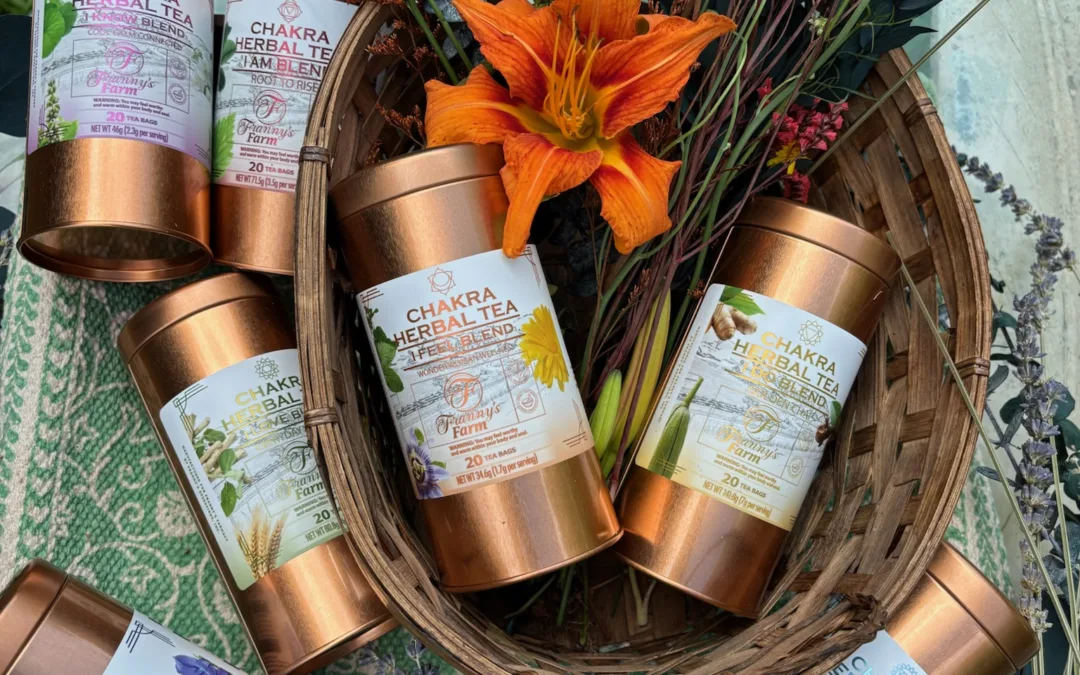
The Chakra Tea Approach to Sleep
At Franny’s Farmacy, our Chakra Tea line was designed to support emotional and energetic balance.
While not marketed exclusively as sleep teas, several blends promote evening calm and grounding.
Sleep issues often correlate with:
-
Heart center imbalance (emotional stress)
-
Root center instability (safety and security concerns)
-
Crown center overactivity (overthinking)
Botanical blends that soothe these areas can indirectly support deeper rest.
The Psychological Power of a Bedtime Tea Ritual
Beyond biology, rituals reduce anxiety.
They create:
-
Closure to the day
-
Predictability
-
Emotional containment
-
Sensory grounding
Modern sleep disruption is often psychological, not physical.
Tea rituals create a bridge between busyness and stillness.
How to Build a Sleep Tea Ritual That Works
Here’s a practical, step-by-step framework.
1️⃣ Set a Time
Choose a consistent time nightly — ideally 60 minutes before bed.
Consistency trains your circadian rhythm.
2️⃣ Dim the Lights
Bright light suppresses melatonin production.
Switch to soft lamps or candles.
3️⃣ Brew Intentionally
Don’t rush it.
Let the water heat slowly.
Watch the steam.
Smell the herbs.
This is nervous system regulation in action.
4️⃣ Pair with Breathwork
While sipping, try:
-
4-7-8 breathing
-
Slow nasal breathing
-
Gentle box breathing
Breath amplifies the tea’s calming effect.
5️⃣ Eliminate Screens
Blue light keeps your brain in daytime mode.
If possible, stop screen use 60 minutes before bed.
Why Warm Liquids Enhance Sleep Physiology
There’s a biological component many overlook.
Warm beverages:
-
Increase peripheral vasodilation
-
Promote relaxation
-
Signal metabolic slowdown
The body naturally drops core temperature before sleep.
Warm tea supports that shift.
Common Mistakes That Sabotage Tea Rituals
Even good habits can fail if poorly timed.
Avoid:
-
Drinking tea too close to bedtime (risk of nighttime bathroom trips)
-
Consuming caffeinated blends
-
Pairing tea with stimulating activities
-
Treating it like a rushed task
Tea is a transition, not a checkbox.
Herbal Tea vs Sleep Supplements
Supplements can be helpful.
But herbal tea offers something unique:
-
Sensory engagement
-
Behavioral conditioning
-
Digestive support
-
Hydration
-
Psychological closure
It’s a full-body intervention, not just a capsule.
The Gut-Sleep Connection
Digestion and sleep are intimately connected.
Poor digestion can lead to:
-
Nighttime wakeups
-
Bloating discomfort
-
Inflammatory stress
Herbal teas often support digestion — indirectly improving sleep.
Peppermint, ginger, and lemon balm are especially helpful here.
Why March Is Ideal for Resetting Sleep Habits
Seasonal shifts disrupt circadian rhythm.
Longer daylight hours can delay melatonin production.
Sleep Awareness Month is the perfect time to rebuild:
-
Consistency
-
Ritual
-
Nervous system safety
Before spring energy ramps up.
Combining Tea with Cannabinoids
For those needing additional support, herbal tea pairs beautifully with:
-
CBD tinctures
-
CBD + CBN gummies
-
Magnesium
Tea regulates the nervous system.
Cannabinoids regulate the endocannabinoid system.
Together, they create layered support.
The Emotional Component of Sleep
Many people don’t struggle with sleep.
They struggle with emotional processing.
Nighttime is when:
-
Thoughts surface
-
Emotions resurface
-
Stress becomes louder
Herbal rituals create space to decompress before lying down.
This prevents mental spillover into the night.
Long-Term Benefits of a Consistent Bedtime Tea Ritual
After 2–3 weeks of consistency, many notice:
-
Faster sleep onset
-
Fewer nighttime awakenings
-
Lower evening anxiety
-
Better digestion
-
Improved morning clarity
Ritual creates rhythm.
Rhythm creates rest.
Final Thoughts: Sleep Is Earned Through Ritual
You cannot bully your body into sleeping.
You must guide it there.
Herbal tea is one of the oldest, most accessible tools for restoring that guidance.
It’s simple.
It’s natural.
It’s powerful.
During Sleep Awareness Month, give your nervous system what it actually needs:
Slowness.
Warmth.
Consistency.
And a mug in your hands.
Ready to Begin Your Sleep Ritual?
Explore Franny’s Chakra Tea collection and begin building your nighttime reset.